World habitat day: Dartmoor’s species-rich Rhos pasture.
World habitat day: Dartmoor’s species-rich Rhos pasture
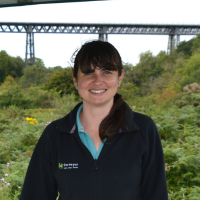 Dartmoor is made up of a wide variety of special habitats, ranging from flower-rich lowland meadows, acid grassland and ancient wooded valleys, to moorland and internationally important blanket bogs and caves.
For World Habitat Day, Ecologist Cathy Horsley is putting a hidden gem called ‘Rhos pasture’ into the spotlight, and discussing a critically endangered insect which, in the UK, can now only be found on Dartmoor:
“Rhos (meaning moor or moorland in Welsh) pasture is also known as purple moor-grass and rush pasture. This nationally important habitat is wet, marshy species-rich grassland, home to a spectacular array of plants and animals. It has a restricted distribution dictated by conditions of high rainfall and poorly drained mainly acidic soils. On Dartmoor, it is usually found in river valleys away from the open moor. There is an estimated 1,000 hectares of Rhos pasture on Dartmoor, spread over approximately 400 sites. Such is the importance of this habitat that it is a UK Biodiversity Action Plan Priority habitat. It performs ecosystem functions of carbon and water storage which in our changing climate is increasingly important.
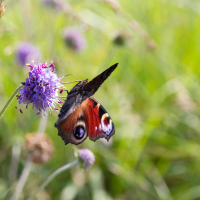
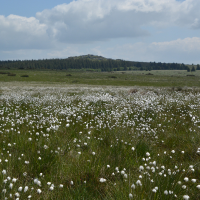 “Rhos pasture is wet underfoot at any time of year, and as such it is characterised by wet-loving plants including cross-leaved heath, devil’s bit scabious, marsh bedstraw, rushes and sedges. In amongst the wettest areas, you may find sphagnum mosses, pale butterwort, sundews, bog asphodel, marsh violet and cotton grass. Purple moor-grass is usually abundant in this habitat. Animals that thrive in these conditions include snipe, curlew, frogs, marsh fritillary butterflies, and the lesser-known bog hoverfly.
“The bog hoverfly, Eristalis cryptarum, is worryingly rare. It is critically endangered and is a Section 41 Priority species. Once widespread in southwest England, now the only known surviving population is on Dartmoor. Over its European range it is sparsely distributed in northern and temperate Europe and Siberia, and is regarded as being threatened and decreasing. As the only UK population has dwindled to just a few sites on Dartmoor, we have a huge responsibility for conserving this fly.
“It’s difficult to spot as it is easily scared away and flighty, but should you be lucky enough to get close, the bog hoverfly is recognised by its bright white bands across the abdomen and deep red markings and orange legs. It is similar to a small bee in appearance. It is on the wing between March and September, being most numerous in May and September. Bog hoverflies particularly enjoy nectaring on heather, devil's-bit scabious, bogbean, tormentil, marsh marigold, bog asphodel and marsh St. John's-wort. They will also rest on sphagnum mosses. They apparently avoid taller plants which attract other closely related hoverflies. 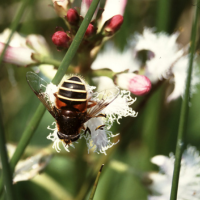
“So why have they declined? Climate change resulting in higher rainfall is likely to impact on their breeding and foraging success by reducing the duration of their flight period. Drought on the other hand may cause sites to dry up. Little is known about the larval stage of the bog hoverfly, but it is thought that dung is used to lay eggs in. De-wormers containing avermectins, a group of insecticides often used to treat cattle, may therefore negatively impact this species. Another factor in their decline is habitat loss.
“Over the years, the UK has lost Rhos pasture through draining, reseeding, cultivation and application of fertiliser for agricultural improvement. Sympathetic management can be difficult to achieve – too little grazing and scrub and purple moor-grass will close in replacing wildflowers and the wildlife that depends on them. Too much grazing and wildflowers get eaten down and the sward becomes uniformly short. The ideal grazing management, of which there are many good examples on Dartmoor, results in a varied vegetation structure, creating plenty of space for wildlife to shelter and hide in and plenty of flowers for insects to feed on. This is usually achieved by light grazing by cattle and ponies between May and September.
“Each of Dartmoor’s habitats have their own special qualities, and this diversity is part of what makes Dartmoor so unique and interesting to me. I love learning about the wildlife that these habitats support, especially the invertebrates as there’s a whole hidden miniature world going on right under our noses!”
You can get involved by recording your wildlife sightings in this or any other habitat, using the ‘iNaturalist’ app. These records are vital to our understanding of how wildlife is faring and informs our work on Dartmoor.
Article by Cathy Horsley
Ecologist
October 7 2024